Top 6 Best Non-Toxic Yoga Mats
6 products independently rated for safety, effectiveness, and value, ranked and reviewed by PollutionProfile.
Most PVC yoga mats contain phthalate plasticizers that off-gas during hot yoga classes and absorb through skin, which is the opposite of what you want during a mindful practice. We rated 6 of the best non-toxic natural rubber and eco yoga mats on material safety, grip (wet and dry), cushion, and sustainability credentials. Ground your practice in something genuinely clean.
10-Year Health Impact
You breathe deeply with your face near your mat for an hour, so what it off-gasses matters.
estimated life gained
in health value
Exposure, primary risk & chemicals modeled
Primary risk
PVC phthalates, antimony from polyester, VOC off-gassing
Natural rubber, cork, or TPE yoga mats eliminate PVC phthalate off-gassing and provide a PFAS-free, heavy-metal-free practice surface.
Chemicals addressed
- DEHP and other phthalates (PVC plasticizers)
- Antimony (polyester processing catalyst)
- Lead stabilizers in PVC
- VOCs from adhesive and coating layers
- PFAS in non-slip treatments (some brands)
Health outcomes
- Reduced phthalate endocrine disruptor exposure
- Lower heavy metal inhalation
- Reduced VOC body burden during exercise
- Healthier skin contact surface
The math, step by step
Study Benchmark
PVC yoga mats contain 20–40% phthalates by weight as plasticizers
Phthalates off-gas during use and absorb dermally; antimony (carcinogen) used as polymerization catalyst in polyester alternatives
Exposure Pathway
Breathing deeply face-down with nose 1–6" from mat surface amplifies VOC inhalation
Hands and bare feet are highly absorptive areas; sweat opens pores increasing dermal absorption during exercise
10-Year Calculation
Phthalate + antimony + VOC inhalation reduction over 10 yrs of regular practice ≈ 8 life-days
Based on 3× weekly yoga practice; benefit scales with frequency of use
Economic Value
8 days × $411/day = $3,300
EPA VSLY methodology; $411/life-day
How we score this category
Effectiveness
Grip (wet and dry), cushioning, and durability rated per yoga style. Natural rubber provides superior grip but is heavier; TPE is lighter and suitable for travel.
Safety
PVC scores zero on safety. Natural rubber (OEKO-TEX certified), cork, and TPE for top marks. No antimony, no PFAS non-slip coatings, no azo dyes in colored mats.
Affordability
Cost per year of use. Premium natural rubber mats ($80–$150) last 5–10 years; PVC mats ($20–$40) last 1–3 years, so they end up comparable or better on a per-year basis.
Certifications
OEKO-TEX Standard 100, GOLS (natural rubber), or bluesign for synthetic alternatives. No universal yoga mat certification exists, so we verify materials and claims independently.
Life-days and economic value are population-level estimates based on peer-reviewed epidemiology using EPA Value of Statistical Life Year methodology (~$150K/year). Individual results vary based on baseline exposure, location, and health status. Not medical advice.

Manduka
Top PickPRO Yoga Mat 6mm — Natural Rubber
Rating breakdown
OEKO-TEX certified, lifetime guarantee, no PVC, no PFAS, no heavy metals
What we love: Closed-cell natural rubber means sweat never absorbs into the mat, and the 6mm cushion protects joints without sacrificing the ground feel serious practitioners need.
Customers say: NA

Liforme
Original Yoga Mat — Natural Rubber
Rating breakdown
Natural rubber, alignment system, no PVC, no phthalates, biodegradable
What we love: The alignment grid is the only one we've tested that genuinely helps correct pose accuracy, and the natural rubber base grips better wet than dry.
Customers say: Customers praise the yoga mat's grip, noting it stays grippy and doesn't move during use, while also appreciating its quality and alignment features, particularly how the lines help with proper foot placement. The mat receives positive feedback for its adjustability, helping maintain proper form during practice, and its padding, with one customer describing it as a dream to use. While some customers say it holds up well after many uses, others report it breaking apart, and opinions on value are mixed, with some finding it worth the money while others consider it pricey. Customers find the mat heavy and note it's not suitable for heavy sweaters.

Jade Yoga
Harmony Mat 3/16" — Natural Rubber
Rating breakdown
Natural rubber, no PVC, no petroleum-based materials, plants a tree per mat sold
What we love: Natural rubber grown without synthetic fertilizers, and Jade plants one tree for every single mat sold. Sustainable from raw material to disposal.
Customers say: Customers praise the yoga mat's grip, noting it doesn't slip and has good traction, while also appreciating its high quality and cushioning that feels good under feet. The mat receives positive feedback for its value, with customers considering it a worthwhile investment. Customers disagree on the mat's durability, with some saying it holds up for years while others report signs of wear and tear. Customers disagree on the thickness, with some finding it nice while others say it's not as thick as other mats, and similarly disagree on the weight, with some appreciating its heft while others find it heavier than expected. The mat has a strong rubber smell that customers find unpleasant.

Hugger Mugger
Para Rubber Yoga Mat — Natural Rubber
Rating breakdown
Natural rubber, no PVC, 30-year company, teacher-trusted brand
What we love: Natural rubber tapped from sustainably managed forests. The 4mm thickness hits the sweet spot between cushion for joints and stability for standing poses.
Customers say: Customers praise the yoga mat's grip, noting it doesn't slip on the floor surface, and appreciate its perfect amount of padding and great thickness. The mat features a beautiful design with a line pattern, and customers like its firm yet cushiony feel. However, they report issues with bad smell and find it heavy.
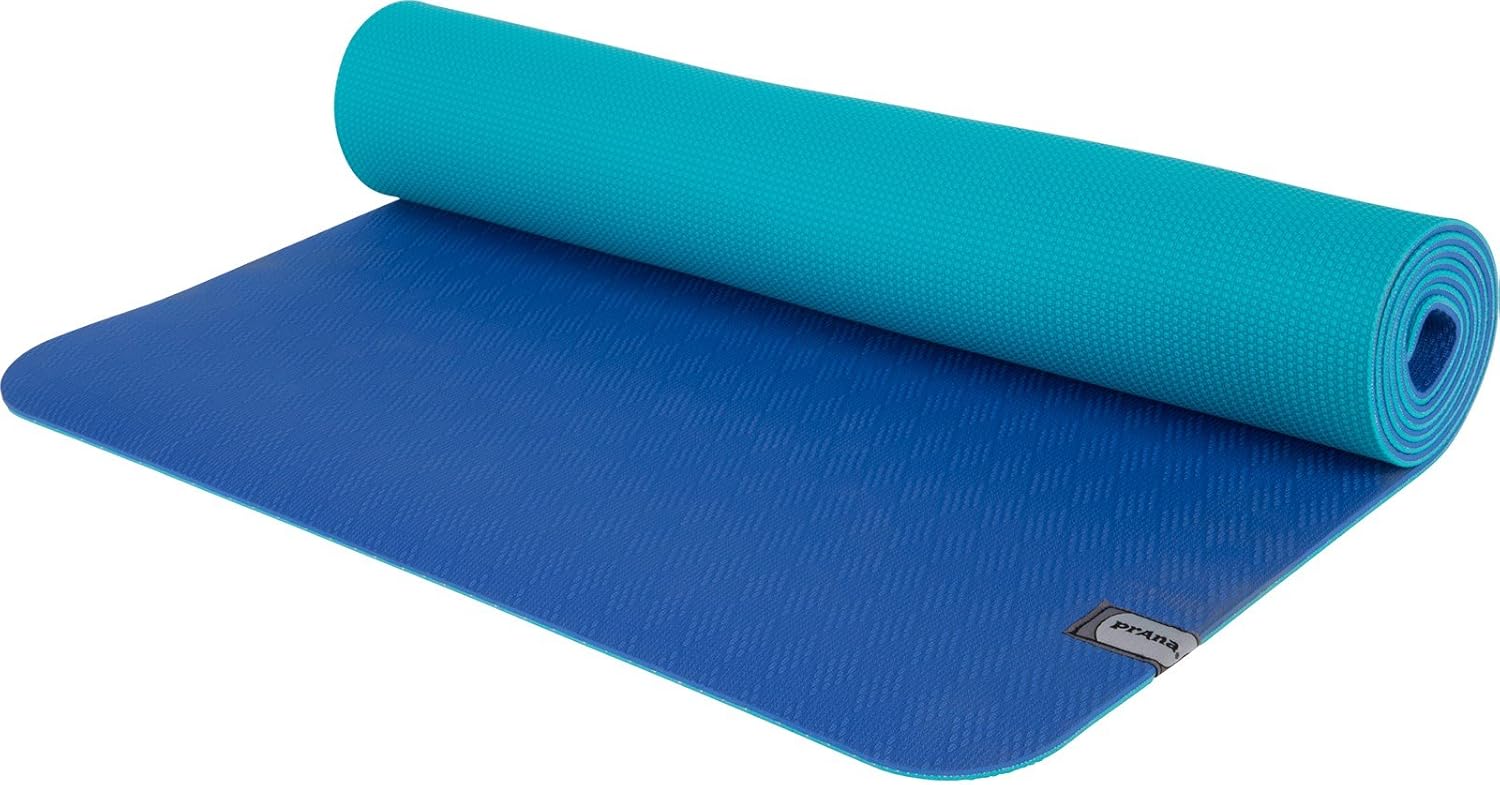
prAna
E.C.O. Yoga Mat — Recycled TPE
Rating breakdown
Recycled TPE (no PVC), free of phthalates and heavy metals, no antimony
What we love: Recycled TPE foam is lightweight, fully biodegradable, and still delivers the cushion and grip of natural rubber alternatives at a lower environmental cost.
Customers say: NA
Gaiam
Performance Dry-Grip Yoga Mat 5mm — TPE
Rating breakdown
PVC-free TPE, phthalate-free, no latex, widely available
What we love: PVC-free foam with a dry-grip textured surface. The best affordable non-toxic mat for beginners who don't want to trade safety for savings.
Customers say: Customers find the yoga mat extremely comfortable for exercises and appreciate its perfect thickness, with one noting it's thick enough for knee work. They like its appearance, particularly the embossed pattern, and consider it well worth the price. The mat receives positive feedback for its grip, with customers noting it doesn't slip at all. However, durability is a concern as customers report the top layer starting to peel off.
As an Amazon Associate, PollutionProfile earns from qualifying purchases. This does not affect our ratings. Products are scored independently based on safety, effectiveness, and certifications.