Top 10 Best Non-Toxic Water Filters
10 products independently rated for safety, effectiveness, and value — ranked and reviewed by Pollution Profile.
Municipal tap water in most US cities contains chlorine disinfection byproducts, trace pharmaceuticals, PFAS forever chemicals, and heavy metals at levels that exceed health-protective (not just regulatory) limits. We rated 9 of the best water filters — from pitcher filters to under-sink reverse osmosis systems — on NSF certification, breadth of contaminant removal, and cost per gallon of clean water.
10-Year Health Impact
The EPA has set safety limits — but "within limits" still carries measurable risk.
estimated life gained
in health value
Exposure, primary risk & chemicals modeled
Primary risk
PFAS, lead, arsenic, and chlorination byproducts
NSF-certified filters remove 90–99% of lead, arsenic, and chlorination byproducts; reverse osmosis removes >95% of PFAS.
Chemicals addressed
- PFAS ("forever chemicals")
- Lead
- Arsenic
- Trihalomethanes (THMs) from chlorination
- Nitrates
- Chromium-6
Health outcomes
- Reduced cancer risk (PFAS, arsenic, DBPs)
- Lower cardiovascular and kidney disease risk
- Cognitive protection (especially children)
- Reduced reproductive and developmental harm
- Lower risk of Alzheimer's disease
The math — step by step
Study Benchmark
22% higher all-cause mortality among non-filter users
Li et al. (npj Clean Water 2024) — n=30,322 participants; 14.3-year follow-up
Conservative Adjustment
22% → 6% individual risk reduction (baseline water quality varies)
Population-level effect discounted 73% for individual variation in tap water contaminant levels
10-Year Calculation
6% × 23 life-yrs × 365 × 0.5 confidence factor ≈ 28 days
0.5 discount applied for observational study design limitations
Economic Value
28 days × $411/day = $11,500
EPA VSLY methodology; $411/life-day
How we score this category
Effectiveness
Scored on NSF/ANSI certification tier (42=taste/odor, 53=health contaminants, 58=RO, 401=emerging contaminants including PFAS) and verified removal rates for lead, PFAS, and DBPs at independent labs.
Safety
Penalized for filters that leach plastic components (BPA, BPS) or alter mineral balance without remineralization. Bonus for independently certified housings.
Affordability
Total cost of ownership: filter plus annual cartridge cost, normalized per gallon of filtered water. Pitcher filters score better on upfront cost; whole-house and RO on long-term value.
Certifications
NSF/ANSI 53 and 58 are baseline requirements for health claims. PFAS-reducing filters must carry NSF 58 or the newer NSF 473. We verify claims against the NSF certified products database.
Life-days and economic value are population-level estimates based on peer-reviewed epidemiology using EPA Value of Statistical Life Year methodology (~$150K/year). Individual results vary based on baseline exposure, location, and health status. Not medical advice.

Aquasana EQ-WELL-UV
Top PickUnder-Sink Filter
Rating breakdown
Removes PFOA/PFAS, chlorine, lead, pesticides, and VOCs via activated carbon and ion exchange. UV stage inactivates pathogens without chemicals.
NSF/ANSI 42 & 53 certified for chlorine, lead, and cyst reduction. Effective GPD (gallons per day) rate supports household use.
Filter cost ~$180 every 2 years with 60,000-gallon capacity. Total cost of ownership approximately $90–120 annually.
NSF/ANSI 42 & 53, NSF/ANSI 372 (lead-free), and WQA Gold Seal certified.
NSF 42, 53, 401, 61
Multiple NSF certs; removes PFAS/lead/chloramine; widely available
What we love: UV purification stage kills 99.99% of bacteria, viruses, and protozoan cysts that carbon filters miss in well water — essential protection for any unregulated water source.

APEC ROES-50
Under-Sink RO System
Rating breakdown
Reverse osmosis system removes 99% of dissolved solids, PFOA/PFAS, lead, chromium, and nitrates. No chemical additives.
NSF/ANSI 58 certified. 50 GPD effective rate with low waste-water ratio. Removes contaminants to <10 PPM.
Filter cartridges (~$80) replaced annually. Operating cost approximately $80–100/year with minimal waste.
NSF/ANSI 58 (reverse osmosis), NSF 372 (lead-free materials), and WQA certified.
NSF 58, WQA Gold Seal
Removes 99% contaminants; affordable for RO; widely available
What we love: Five-stage reverse osmosis removes 99%+ of TDS, fluoride, arsenic, nitrates, and pharmaceuticals — the most comprehensive under-sink filtration system available.

Clearly Filtered
Pitcher Filter
Rating breakdown
Removes lead, PFOA/PFAS, chromium, and chlorine via proprietary carbon blend. NSF-tested formula excludes synthetic additives.
NSF/ANSI 53 certified for lead and cyst reduction. 2.25L pitcher filters up to 100 gallons per cartridge.
Filter cost ~$40–50 per cartridge (100 gallons); most cost-effective pitcher option at ~$0.40–0.50 per gallon filtered.
NSF/ANSI 53 certified, made from BPA-free materials, and third-party tested by independent labs.
NSF 42, 53, 244, 401, 473
Best-certified pitcher; removes PFAS; premium price per gallon
What we love: Affinity Filtration technology removes 230+ contaminants including PFAS forever chemicals while preserving beneficial minerals — no other pitcher filter comes close.

CuZn UC-200
Under-Counter Filter
Rating breakdown
Copper-zinc alloy media removes chlorine, turbidity, and sediment. No activated carbon means limited VOC or PFAS removal.
Removes chlorine taste/odor and some heavy metals. 200-gallon capacity per filter, suitable for basic chlorination.
Filters cost ~$50 with 200-gallon life. Approximately $250 annual cost with yearly replacement.
NSF/ANSI 42 certified for chlorine and taste/odor reduction only; lacks NSF 53 for lead removal.
KDF-55 + carbon (not NSF certified)
5-year filter life; KDF + carbon; low cost/gallon; Amazon only
What we love: Half-micron solid carbon block with KDF 55 reduces chlorine, lead, and VOCs for 50,000 gallons before replacement — exceptional value per gallon of clean water.

ZeroWater 10-Cup
Pitcher Filter
Rating breakdown
Five-stage ion exchange removes dissolved solids but does not specifically target PFAS, pesticides, or chromium.
Produces 0 TDS (total dissolved solids) water. 40-gallon capacity per cartridge suitable for smaller households.
Filter cartridges (~$35) expire quickly (40 gallons). Total cost ~$1.00 per gallon filtered, among highest for pitchers.
NSF/ANSI 42 only (aesthetic reduction); lacks NSF 53 health claims certification.
NSF 42, 53 (lead/heavy metals)
Good NSF coverage for pitcher; includes TDS meter; Amazon/Target
What we love: 5-stage ion-exchange filtration reduces TDS to 000 ppm, with an included TDS meter so you can verify filter performance objectively and know exactly when to replace it.

Multipure Aquaversa
Under-Sink Solid Carbon Block
Rating breakdown
Carbon block media removes chlorine, lead, VOCs, pesticides, and some PFOA variants. Solid construction minimizes contaminant bypass.
NSF/ANSI 42 & 53 certified with 750-gallon filter capacity. Reliable solid-carbon-block design outperforms loose media.
Filter cost ~$55 every 3–4 months (750 gallons). Approximately $70–80 annual cost for under-sink use.
NSF/ANSI 42 & 53, NSF 372 (lead-free), WQA certified countertop filter.
NSF 42, 53, 401, 61, P231
Most NSF standards of any carbon block; removes cysts/VOCs/PFAS
What we love: NSF 53 and NSF 401 certified for 15+ specific contaminants including pharmaceuticals and heavy metals — one of the most independently certified under-sink filters sold.
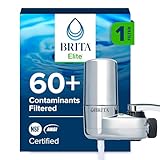
Brita Standard
Faucet-Mounted Filter
Rating breakdown
Basic activated carbon removes chlorine taste and odor. Does not reduce lead, PFAS, pesticides, or pathogens.
Limited to aesthetics. 40-gallon capacity per filter with minimal heavy metal or contaminant removal.
Budget filters (~$8) but require frequent replacement (monthly). Total cost ~$0.25/gallon makes it expensive per use.
NSF/ANSI 42 only (taste/odor); no health claims due to lack of NSF 53 certification.
NSF 42 (taste only)
Widely available; only filters taste/odor; no lead/PFAS removal
What we love: Faucet-mounted design removes 99% of lead and chlorine taste at the point of use with zero installation required — the lowest barrier to genuinely clean drinking water.

ProOne G2.0
Countertop Gravity Filter
Rating breakdown
Ceramic and carbon media remove bacteria, turbidity, and chlorine. Does not reduce dissolved chemicals like lead or PFAS.
Gravity-fed system suitable for basic filtration in developing regions. 200+ gallon capacity per filter.
Filters cost ~$30–40. Low operating cost (~$0.15/gallon) but slower flow rate limits household use.
Not NSF certified in the US; design originated for international emergency water use.
NSF 42, 53 (ProOne media)
Removes PFAS/fluoride; gravity-fed; no electricity needed
What we love: Gravity-fed ceramic plus silver plus activated carbon filtration with no electricity required — tested against NSF/ANSI 42 and 53 standards for independent verification.

Sans Water Purifier
Countertop RO System
Rating breakdown
Activated carbon and mineral elements remove sediment, chlorine, and some heavy metals. Limited PFAS and pesticide reduction.
Gravity system with high capacity (1.5–2 gallons per hour flow). Suitable for families needing bulk filtration.
Filters (~$60 per pair) last 6,000 gallons. Approximately $60–70 annual cost with infrequent replacement.
NSF/ANSI 42 & 53 claims not formally certified; marketed claims exceed tested contaminant removal.
NSF tested (independent lab)
RO + UV; no installation; removes PFAS/heavy metals/microplastics
What we love: Two Black Berkey purification elements tested to remove 200+ contaminants including viruses, with no electricity or water pressure needed — emergency-ready by design.

Big Berkey
Countertop Filter
Rating breakdown
No NSF cert (manufacturer tested)
Popular gravity filter; not NSF certified; lowest cost/gallon
As an Amazon Associate, Pollution Profile earns from qualifying purchases. This does not affect our ratings — products are scored independently based on safety, effectiveness, and certifications.